
Hotel cybersecurity is no longer only an IT responsibility. Because hotels depend on interconnected technology, third-party providers, cloud platforms, payment systems, property management systems, mobile applications, and digital guest services, a cyberattack can disrupt daily operations, revenue, guest trust, compliance, and business continuity.
For hotel owners, general managers, and hospitality executives, the key question is no longer simply, “Are we compliant?”
It is:
Can our hotel continue operating safely and effectively if a critical system, employee account, vendor, or technology provider is compromised?
What Is Hotel Cybersecurity?
Hotel cybersecurity is the practice of protecting a property’s systems, data, employees, guests, vendors, and operations from unauthorized access, disruption, fraud, and cyberattacks.
A hotel cybersecurity program typically includes:
- Property management system security
- Point-of-sale and payment security
- Guest Wi-Fi protection
- Identity and access management
- Employee security awareness
- Vendor and third-party risk management
- Vulnerability management
- Incident response
- Backup and recovery planning
- Compliance and continuous security validation
The goal is not only to prevent data theft. It is also to keep essential hotel services available and trustworthy.
Hotel cybersecurity is the practice of protecting a property’s systems, data, employees, guests, vendors, and operations from unauthorized access, disruption, fraud, and cyberattacks.
A hotel cybersecurity program typically includes:
- Property management system security
- Point-of-sale and payment security
- Guest Wi-Fi protection
- Identity and access management
- Employee security awareness
- Vendor and third-party risk management
- Vulnerability management
- Incident response
- Backup and recovery planning
- Compliance and continuous security validation
The goal is not only to prevent data theft. It is also to keep essential hotel services available and trustworthy.
Why Is Cybersecurity an Operational Risk for Hotels?
Hotels rely on technology to manage reservations, process payments, issue room keys, communicate with guests, coordinate employees, and operate facilities. If a critical system becomes unavailable or compromised, the impact can extend well beyond the IT department.
A cyber incident may affect:
- Reservations and booking operations
- Payment processing
- Property management systems
- Digital room keys
- Guest communications
- Employee access
- Vendor services
- Loyalty programs
- Building-management systems
- Business reporting and financial operations
The 2023 cyberattack against MGM Resorts demonstrated how a security incident can disrupt hotel operations, reservations, digital room keys, payment systems, and other guest-facing services.
This illustrates an important distinction:
Cyber risk is now business-continuity risk.
A hotel does not need to lose millions of records for a cyberattack to cause significant financial damage. If employees cannot access critical systems, guests cannot pay, or reservations cannot be processed; the organization is already experiencing an operational cyber incident.
Why Is Hotel Cyber Risk Increasing?
Hotel cyber risk is rising because hospitality environments are increasingly interconnected and dependent on external organizations.
A typical hotel may use:
- Property management systems
- Point-of-sale systems
- Payment processors
- Reservation platforms
- Guest Wi-Fi
- Mobile applications
- Electronic door locks
- Loyalty systems
- Cloud applications
- Building-management systems
- Managed service providers
- Technology integrations
- Remote-access tools
At the same time, cybercriminals are using artificial intelligence to create more convincing phishing messages, impersonation attempts, and social-engineering attacks. Attackers can automate reconnaissance, identify likely targets, and tailor communications to specific employees or business processes.
The result is a broader and more complex attack surface.
The more systems, people, vendors, and integrations a hotel depends on, the more pathways an attacker may have to reach critical operations.
How Does a Hotel’s Attack Surface Work?
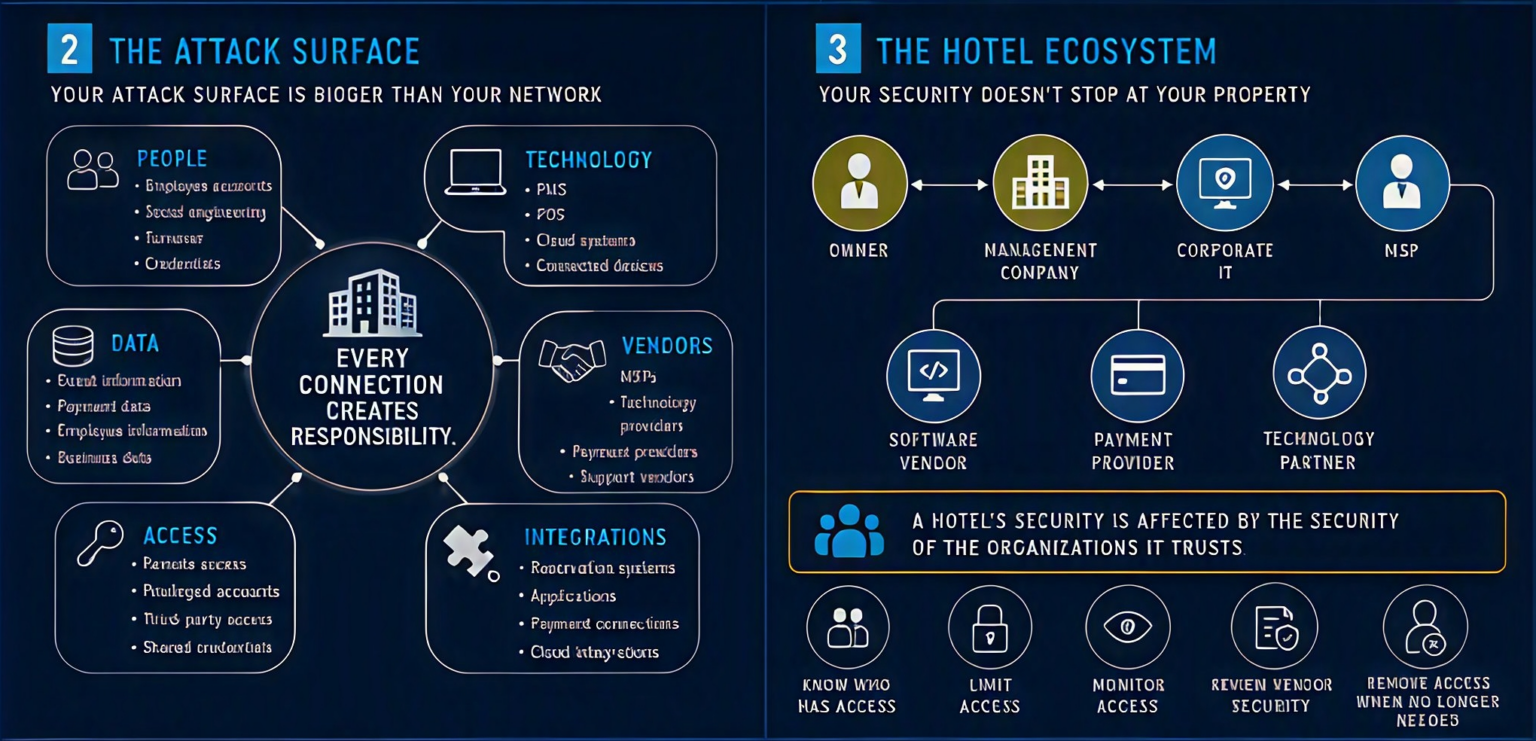
A hotel’s attack surface includes every system, account, device, application, connection, employee, vendor, and process that could be used to gain unauthorized access or disrupt operations.
Common parts of a hotel attack surface include:
- Employee accounts
- Vendor accounts
- Remote-access connections
- Payment systems
- Guest networks
- Cloud platforms
- Mobile applications
- Outdated software
- Third-party integrations
- Shared credentials
- Unmanaged devices
- Physical access systems
A hotel does not necessarily have to be compromised through its most sophisticated system. An attacker may instead target a vendor account, employee credential, remote-access connection, outdated system, or poorly protected integration.
For this reason, hotel leaders need to understand not only which systems the property operates, but also:
- Who has access
- Why access is required
- Whether access is still necessary
- How access is monitored
- How quickly access can be removed
Why Third-Party Risk Matters in Hospitality
Third-party risk is one of the most important hotel cybersecurity concerns because properties depend on outside organizations for technology, support, payments, cloud services, applications, and integrations.
A hotel environment may involve:
- Owners
- Management companies
- Franchisors
- Corporate IT teams
- Local IT providers
- Managed service providers
- Payment providers
- Software vendors
- Reservation partners
- Security and building-system vendors
Each organization may control a different part of the technology environment. This creates a critical governance question:
Who is responsible for securing the entire hotel ecosystem?
The Caesars Entertainment breach provides a clear example of the risk. The company disclosed that an attacker obtained access through a social-engineering attack against an outsourced IT support vendor.
The lesson is straightforward:
A hotel’s security is affected by the security of the organizations it trusts.
Effective third-party risk management should include:
- Maintaining an inventory of vendors
- Documenting vendor access
- Limiting access to what is necessary
- Requiring appropriate security controls
- Reviewing vendor security practices
- Removing access when contracts or roles end
- Monitoring remote access
- Including cybersecurity requirements in contracts
- Testing incident-response responsibilities
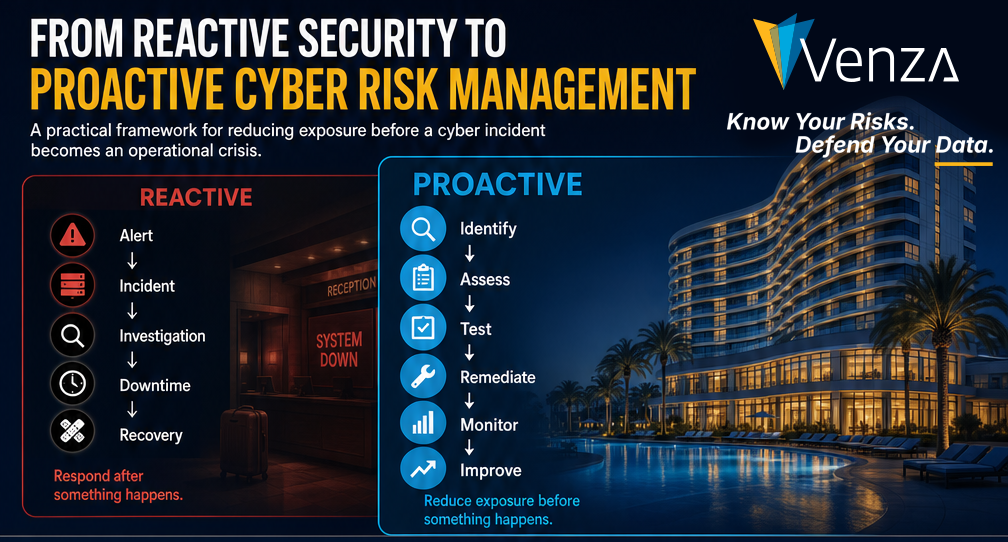
How Can Hotels Move From Reactive to Proactive Cybersecurity?
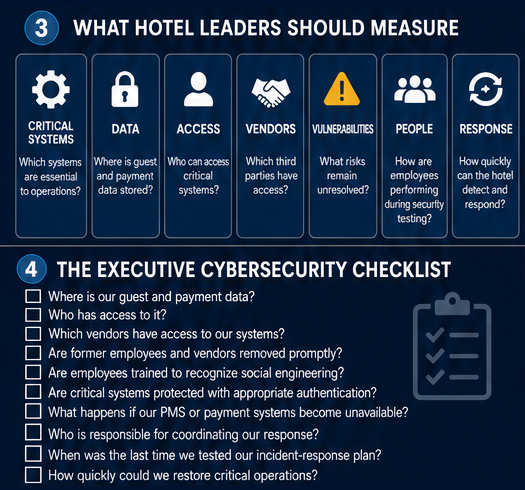
Hotels can begin moving from reactive security to proactive cyber risk management by taking several practical steps:
- Identify critical operations and systems.
Determine which systems are essential for reservations, payments, guest services, access control, and business continuity.
- Map data and access.
Document where guest, employee, payment, and business data resides and who can access it.
- Review third-party relationships.
Identify vendors with system access and confirm that access is limited, monitored, and removed when no longer needed.
- Strengthen identity controls.
Use unique accounts, strong authentication, multifactor authentication where appropriate, and timely access removal.
- Make security awareness continuous.
Provide role-specific training and test employees against realistic social-engineering scenarios.
- Test incident response and recovery.
Confirm that employees know what to do and that critical systems and data can be restored.
- Measure and report risk.
Give leadership clear information about unresolved vulnerabilities, access risks, vendor exposure, training results, and recovery readiness.

A New Way to Think About Hotel Cybersecurity
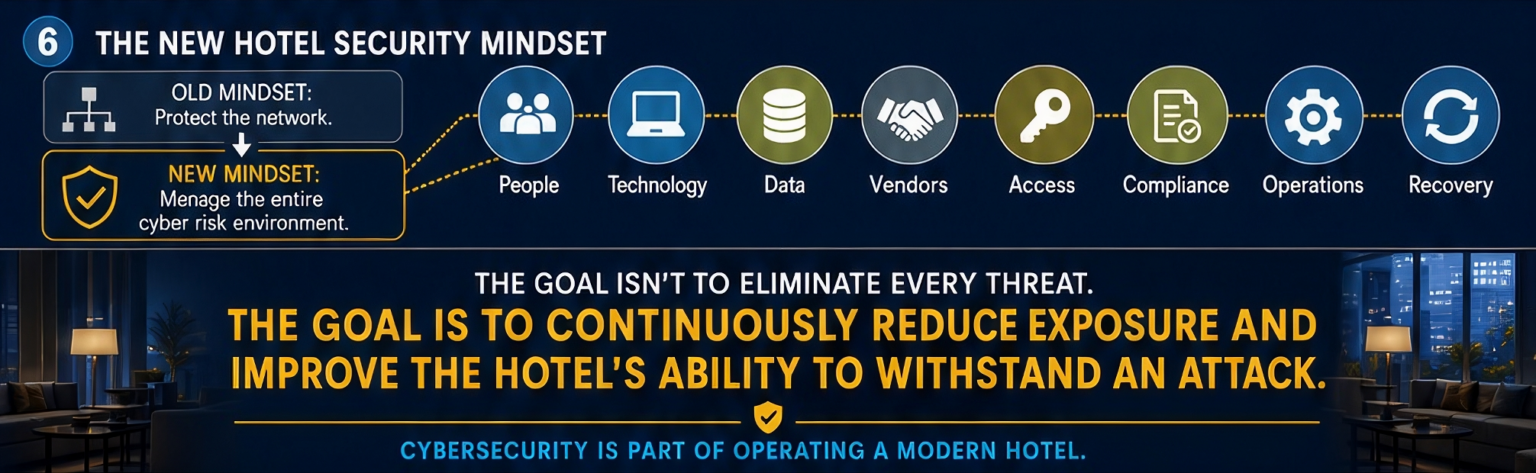
The hospitality industry does not need to become a collection of cybersecurity experts. It needs to become better at managing cyber risk.
That means bringing security into everyday operational decisions and recognizing that technology, employees, vendors, compliance, guest experience, and business continuity are connected.
The most secure hotel is not necessarily the one with the most technology. It is the one that understands where its exposure exists, continuously measures that exposure, prepares its people, manages its technology and vendors, and takes action before a problem becomes an incident.
Cybersecurity is no longer something that happens behind the scenes in IT. It is part of operating a modern hotel.
Key Takeaways
- Hotel cybersecurity is an operational and business-continuity issue, not only an IT issue.
- Interconnected systems and third-party providers are expanding the hotel attack surface.
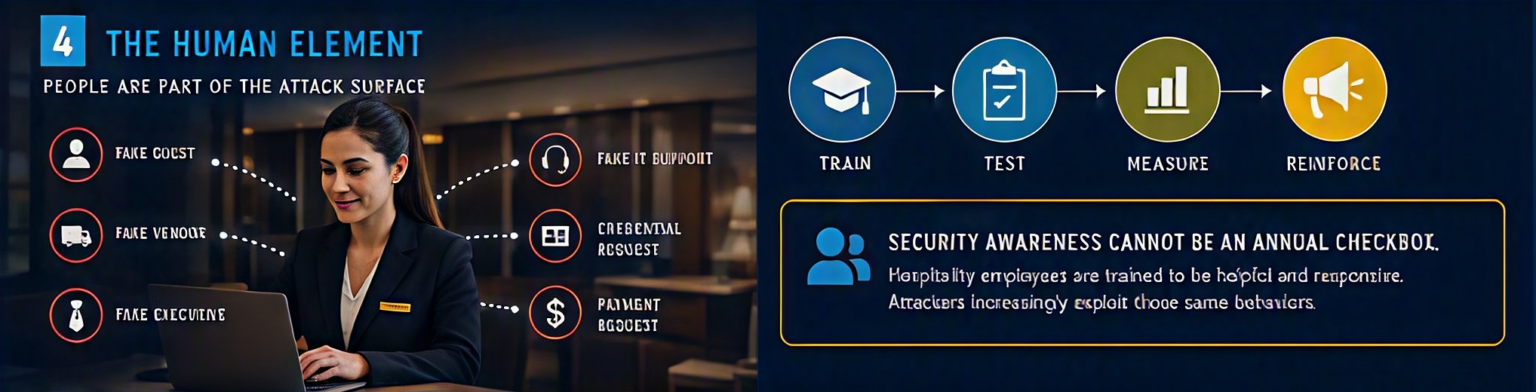
- Employee behavior and social engineering remain major sources of risk.
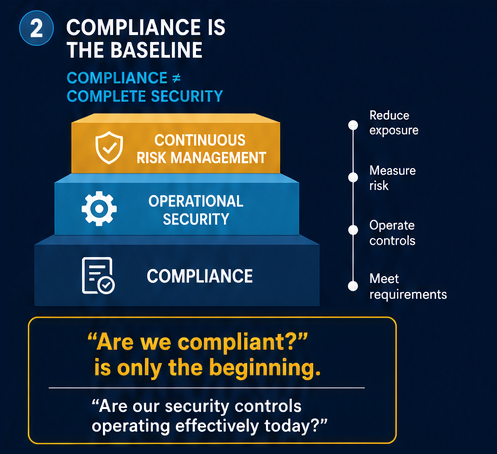
- Compliance is important, but it does not replace continuous security management.
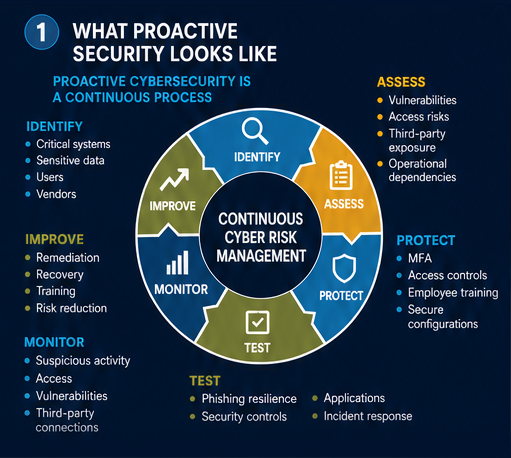
- Proactive cybersecurity focuses on reducing exposure before an attack occurs.
- Hotel leaders should understand critical systems, sensitive data, user access, vendor risk, and recovery readiness.
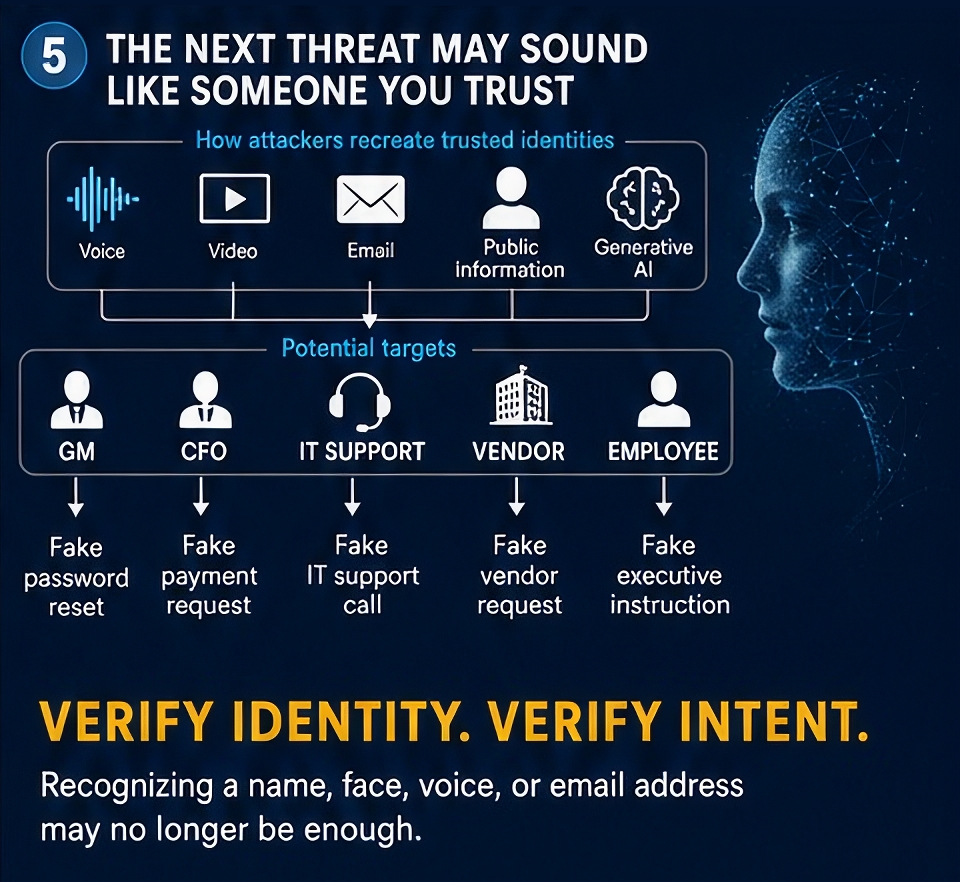
- AI-enabled impersonation will make identity and intent verification increasingly important.
- The goal is to continuously reduce cyber risk while protecting hotel operations, guests, revenue, and reputation.